
Automotive Fasteners
What are Automotive Fasteners?
In the automotive industry, fasteners are used to secure two or more parts in an automobile. As automobiles are often subject to stressful conditions – both internally and externally, fasteners play an important role in ensuring car equipment safety.
The three main types of automobile fasteners are nuts, bolts, and washers. These fasteners are typically made of two materials: plastic or stainless steel – the latter being the strongest and thus primarily used for door panel, small engine part, and airbag housing applications. Plastic fasteners are more suitable for upholstery fixes and non-structural applications.
When working on an automotive project, it’s important to know exactly what type of fastener and material you’ll need to get the best results and ensure safety, durability, and strength of your car. Let’s take an in-depth look at construction fasteners in order to determine what you’ll need!
Fastener Application in Vehicles
In vehicles and automotive manufacturing, fastener application use, includes the following:
- Transmission
- Chassis
- Engine
- Interior Trim
- Front & Rear Axle
- Steering
Types of Automotive Fasteners
Our story begins in 2011 when our founder Alex Schubow was looking for specific parts for his 1990s Land Rover. He found himself always going to the hardware store for one screw. Choosing a type of automotive fastener is a crucial part of any project as vehicles are held together by fasteners. After reviewing your vehicle application use (above), it’s time to choose the correct fastener for your project. Here is a list of three basic automotive fasteners and how they will work with your specific project.
Automotive Nuts & Bolts
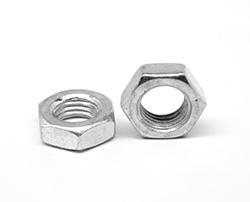
A nut has an interior (female) threading that works to secure bolts and screws to a surface. Commonly used automotive nuts, include:
- Clamp Nuts
- Flange Nuts
- Hex Nuts
- Rivet Nuts
- Tee Nuts
One of the most common fasteners used in the automotive industry is
the hex head bolt and is necessary for engine, transmission, suspension and brake system operation.
Automotive Screws
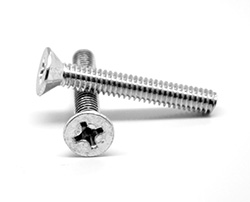
Screws are an incredibly versatile fastener in automotive manufacturing and are also offered in a wide variety of materials and plating including: steel and stainless steel, plain, zinc, zinc yellow, and black oxide.
Automotive Washers
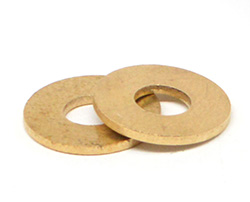
Washers are used in many applications, along with a bolt or screw, or a nut, to increase the bearing
surface of the fastener. This spreads out the clamping load, which in turn prevents damage to the
underlying material.
Top Products
Automotive Fastener Materials
The next important step in determining what automotive fastener you’ll need is choosing a fastener material. The material of your fastener will not only affect how your project looks, but will also affect corrosion resistance, strength, thermal conductivity, and temperature control.
Let’s take a look at common automotive fastener materials to determine which one will be right for you.
Here are five of the most common types of steel used in the automotive industry.
Steel
Steel is one of the most common and most reliable materials used in the automotive industry due to its ability to be manufactured into various shapes – as well as being a cost-effective and durable option.
Where steel is used in vehicles often differs. They can be used to produce engine components, including:
- Bushings
- Bearings
- Exhaust pipes
- Radiators
- Car frames
- Wheel rims
- And more!
Stainless Steel
Stainless Steel is a great material when it comes to automotive fasteners due its strength and resistance to corrosion – an important factor for automobiles in areas of constant weather changes. During the winter, road salt can often lead to fastener corrosion.
Metal fasteners made of stainless steel are typically cold works and heat treated. This ensures strength and durability of the material.
Alloy Steel
Alloy Steel is typically more complex and sophisticated as it’s created using materials with specific chemical compositions, creating a tough and ductile material that is the preferred choice for applications where strength is critical, including:
- Suspensions
- Frames
- Seat belt fasteners
- Bumpers
- Engine components
Plastic
Frequently made with vinyl, plastic fasteners are manufactured through injection molding. Though they aren’t as strong as stainless steel, they have a high resistance to shock and vibrations.
Aluminum
Aluminum’s weight to strength ratio is the reason it makes a great material for automotive manufacturing. It is also non-magnetic, thermal and electrically conductive, and hot and cold forged.
Contact Us Today
For 20 years, ASMC Industrial has been the go-to, all-in-one shop for your every hardware need. With our inventory of over 15 million hardware pieces, you are guaranteed to find the exact piece you’re looking for – no matter the project.
For assistance, contact us today to speak with one of our knowledgeable staff members who can help find the right automotive fastener for you.